
How a Five-Second Shot Gets Made
From one written sentence to a finished cinematic clip: the exact creative process behind our AI filmmaking pipeline.

People ask how the episodes come together. Here is the whole process, start to finish, exactly as it runs in our studio.
Everything begins in a plain text file. Each episode of Luna’s Frequency is five shots, and each shot starts as one written sentence describing what the camera sees. A young woman lifts clear headphones onto her ears while rain streaks a teal window. That sentence is the shot. Writing it well is most of the work.
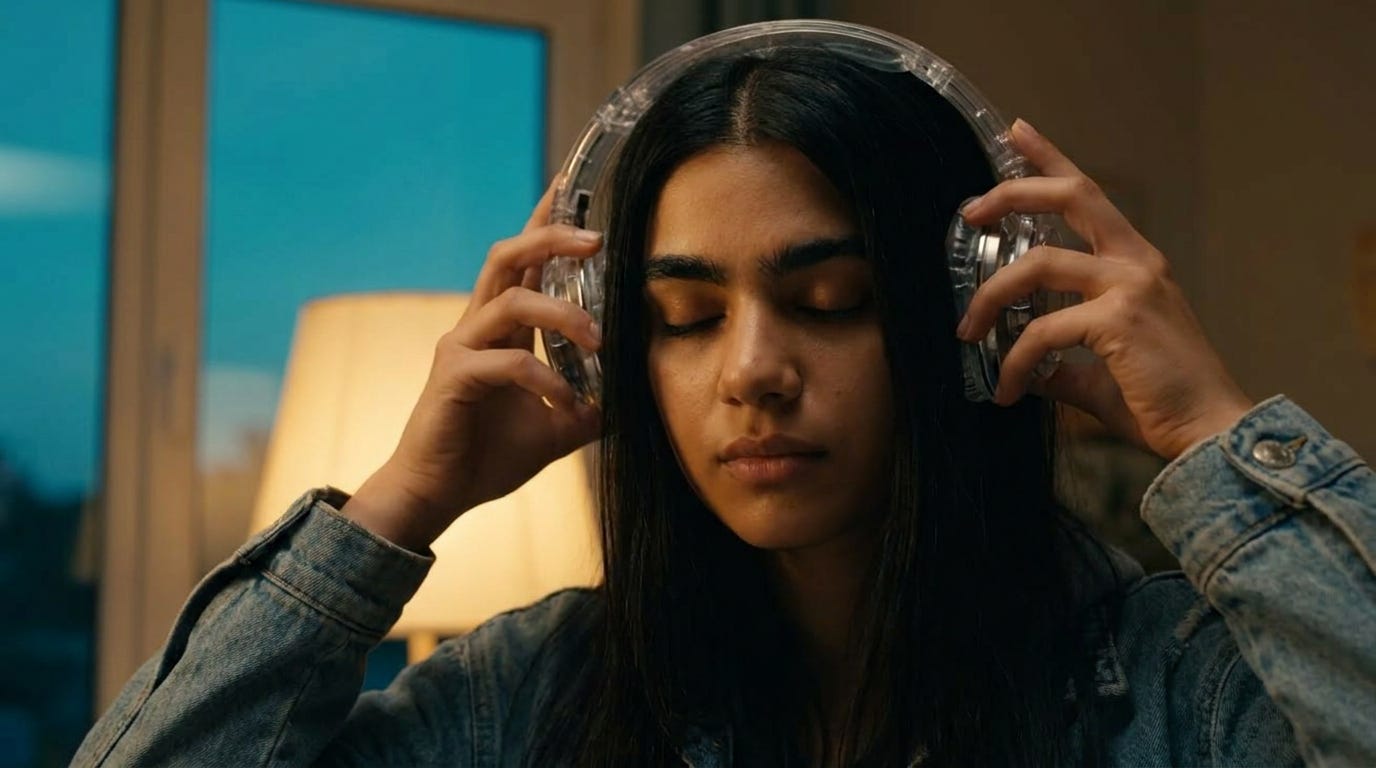
The sentence carries specific decisions. Warm lamp inside, teal dusk outside. Eyes closing. The jacket she always wears. Every detail you name is a choice you made. Every detail you leave out gets invented by the machine, and the machine invents the average.
Next comes the character. Our lead has a written canon: her features, her wardrobe, her expression range, the two lighting moods her world lives in. Every generation call carries one clean reference image of her face, so she stays herself across dozens of scenes. Consistency is a discipline you build into the process, and it pays off every single day.
Then we generate the still. An image model reads the sentence and the reference and returns a frame in about a minute. We look at it honestly. Wrong light, flat expression, a hand doing something strange: back to the sentence, change one line, run it again. Most shots land within a few passes.
A human approves every frame. The stills land in a review grid, and a person says yes or no to each one. The machine proposes. A person decides. That order never flips in our studio.
Approved stills go to motion. Any image-to-video tool can take a frame and a short movement note and return a living shot. We keep the moves simple: a slow push toward her face, a gentle pull away, light sweeping across a surface. Five seconds. Restraint reads as cinema. Big showy moves read as a demo.
Sound comes last, and we keep it quiet. Faint room tone, distant air, the ambient bed of a real place. The frame stays clean of text and effects. What remains is the image and the feeling.
Count the crew in that pipeline. A hundred years of filmmaking required a writer, a casting director, a location scout, a gaffer, a camera operator, an editor and a sound mixer. The AI filmmaking version folds those crafts into one person at a desk making decisions in sequence. The crafts survived. They compressed into judgment.
Notice where the hours actually go. Generation takes minutes. Writing the beat sheet, deciding what the episode means, choosing which frame carries the feeling: that fills the day. The creative process is now almost entirely creative decisions. The technical waiting that used to surround them has collapsed to nearly nothing.
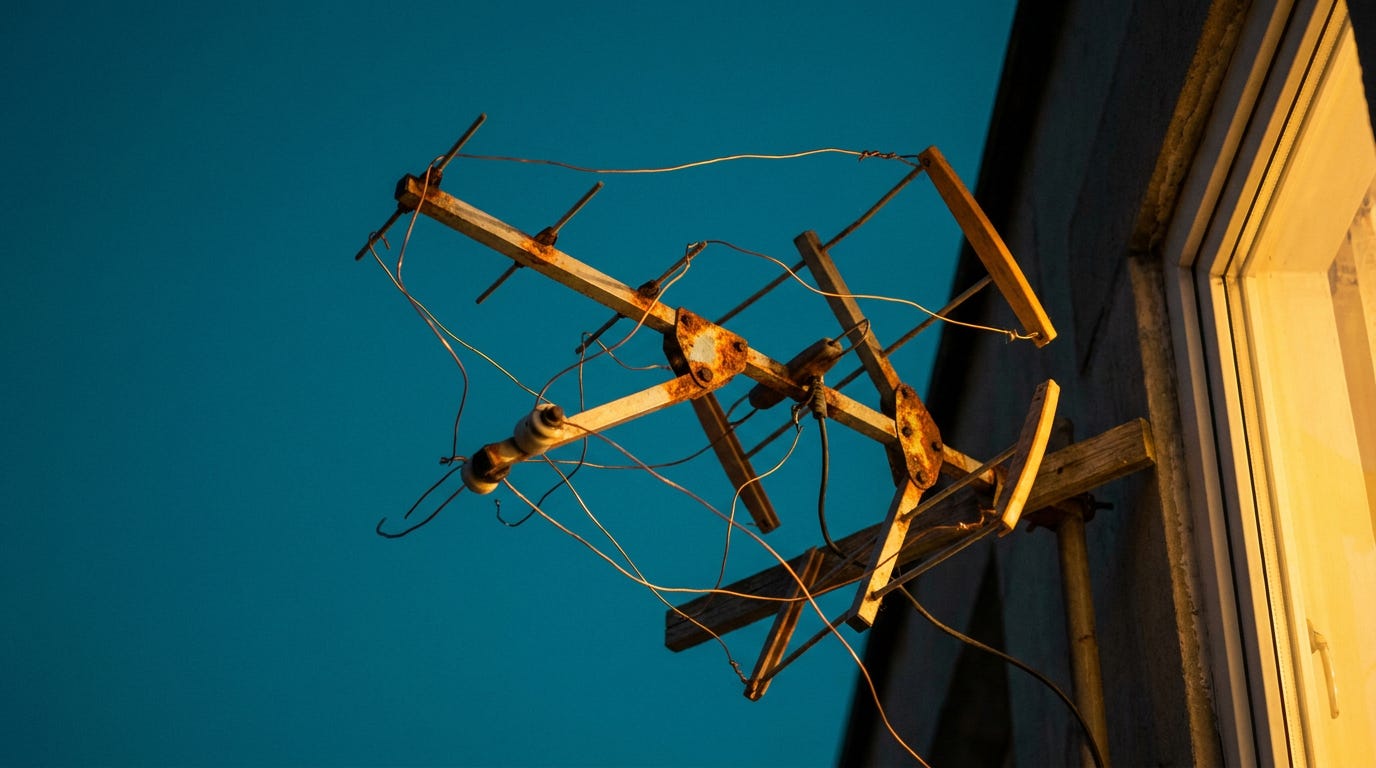
Notice also what the process refuses to automate. The machine never decides what a shot is about. It renders a rooftop antenna beautifully and has no opinion on why a young woman built it from scavenged wire, or what she hopes will answer when she switches it on. Those answers come from the person writing the sentences. Visual storytelling lives in that gap, and the gap belongs to you.
You can run this same loop tonight with whatever tools you have. Write five sentences that describe five connected shots. Generate each one. Approve the frames that hold the feeling and redo the ones that leak it. Add one slow camera move. Watch your first finished scene exist by the end of the evening.
Keep your sentences as the source of truth. Tools will change under you every few months, and your written scenes will outlive all of them. A beat sheet moves to whatever renders it best.
The full list of what we currently use sits in the tools section of our Creative Process page: linktr.ee/IFSI.Studio.
---
IFSI Studio · Artist studio building narrative works with art and technology.